§ 2.4section 4 of 20·~9 min
Exceptions and context managers
How exceptions work
When something goes wrong, Python raises an exception. If nothing catches it, the program stops and prints a traceback. Read a traceback from the bottom up: the last line is the error type and message, and the lines above it show the chain of calls that led there, ending at the exact line.
Traceback (most recent call last):
File "main.py", line 9, in <module>
lib.issue_book("1", "M2")
File "library.py", line 27, in issue_book
raise BookNotAvailableError(...)
BookNotAvailableError: 'Wings of Fire' is issued to M1
try / except / else / finally
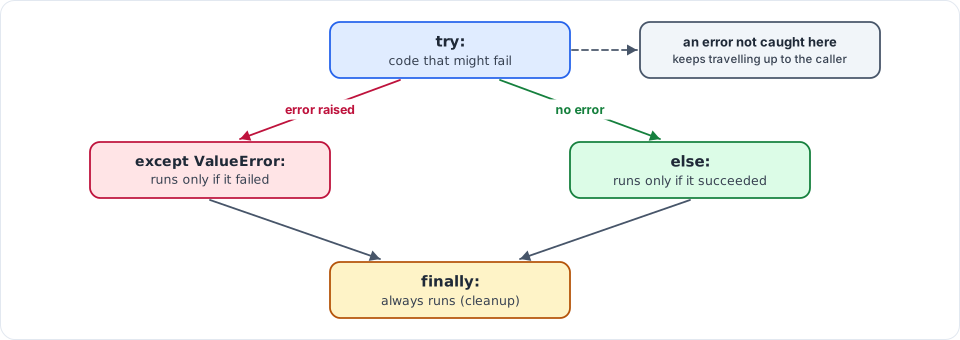
Figure 2.2: Which blocks run when. finally always runs, so it's where cleanup goes (or use a with block, which does it for you).
try:
library.issue_book("978-0", "M1") # code that might fail
except BookNotAvailableError as e: # handle one specific problem
print(f"Sorry: {e}")
except KeyError:
print("No such book or member")
else:
print("Issued!") # runs only if NO exception happened
finally:
print("done") # ALWAYS runs: use it for cleanup
Custom exceptions
A custom exception is a one-line class that names a problem in your domain:
class BookNotAvailableError(Exception):
"""Raised when a book is already issued."""
raise BookNotAvailableError(f"'{book.title}' is issued to {book.issued_to}")
Callers can then handle "book unavailable" differently from "typo in the ISBN". In Week 13 your agent's tools will raise errors and return the message to the LLM so it can try again. Clear, specific error messages make agents smarter.
Rules
- Catch specific exceptions. A bare
except:orexcept Exception: passswallows every error, including your own bugs, and leaves you debugging in the dark. - Don't use exceptions for normal control flow when a simple
ifis clearer. - Raise early. Check inputs at the top of a function (
if amount <= 0: raise ValueError(...)).